
So, what exactly is a cantilevered stair?
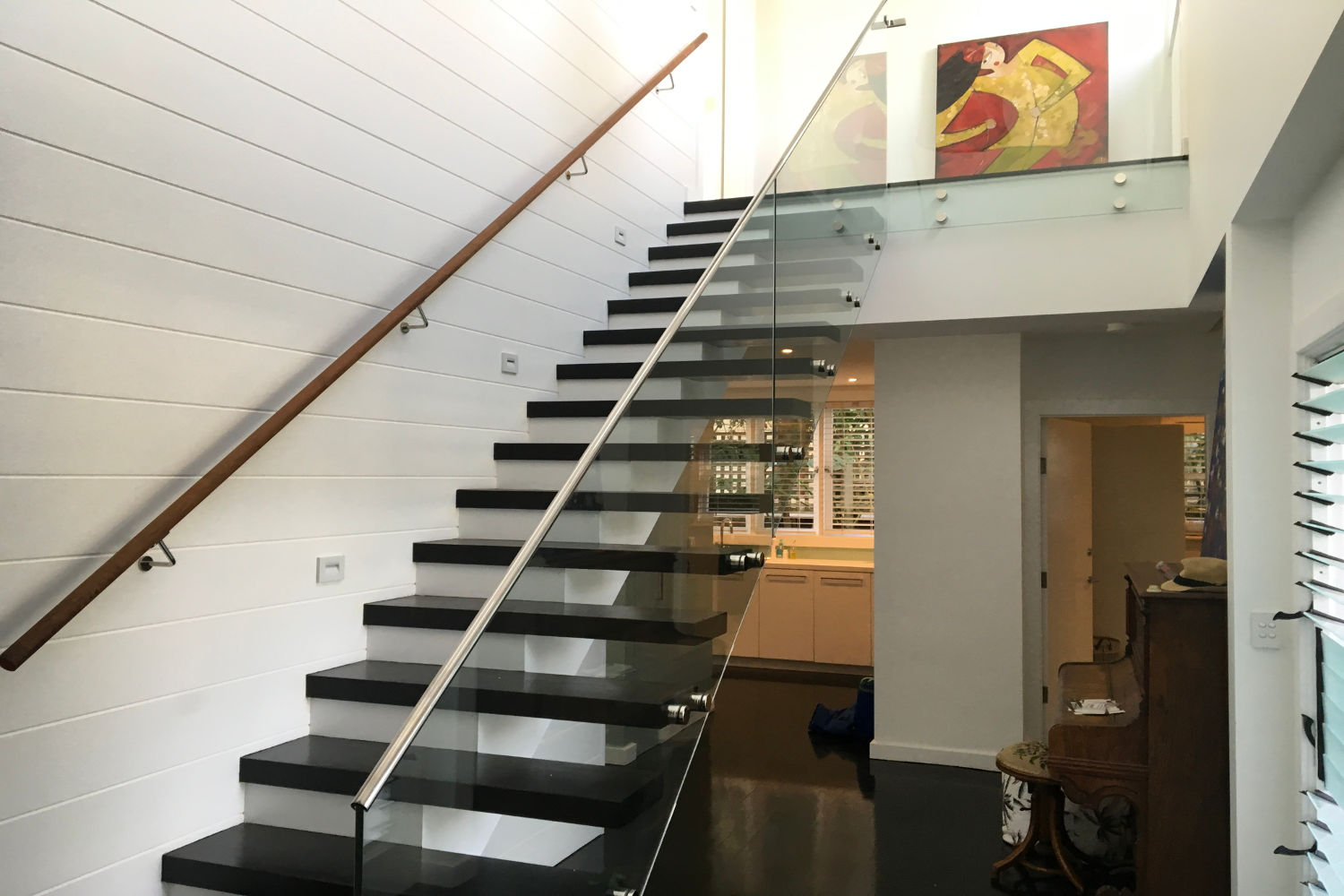
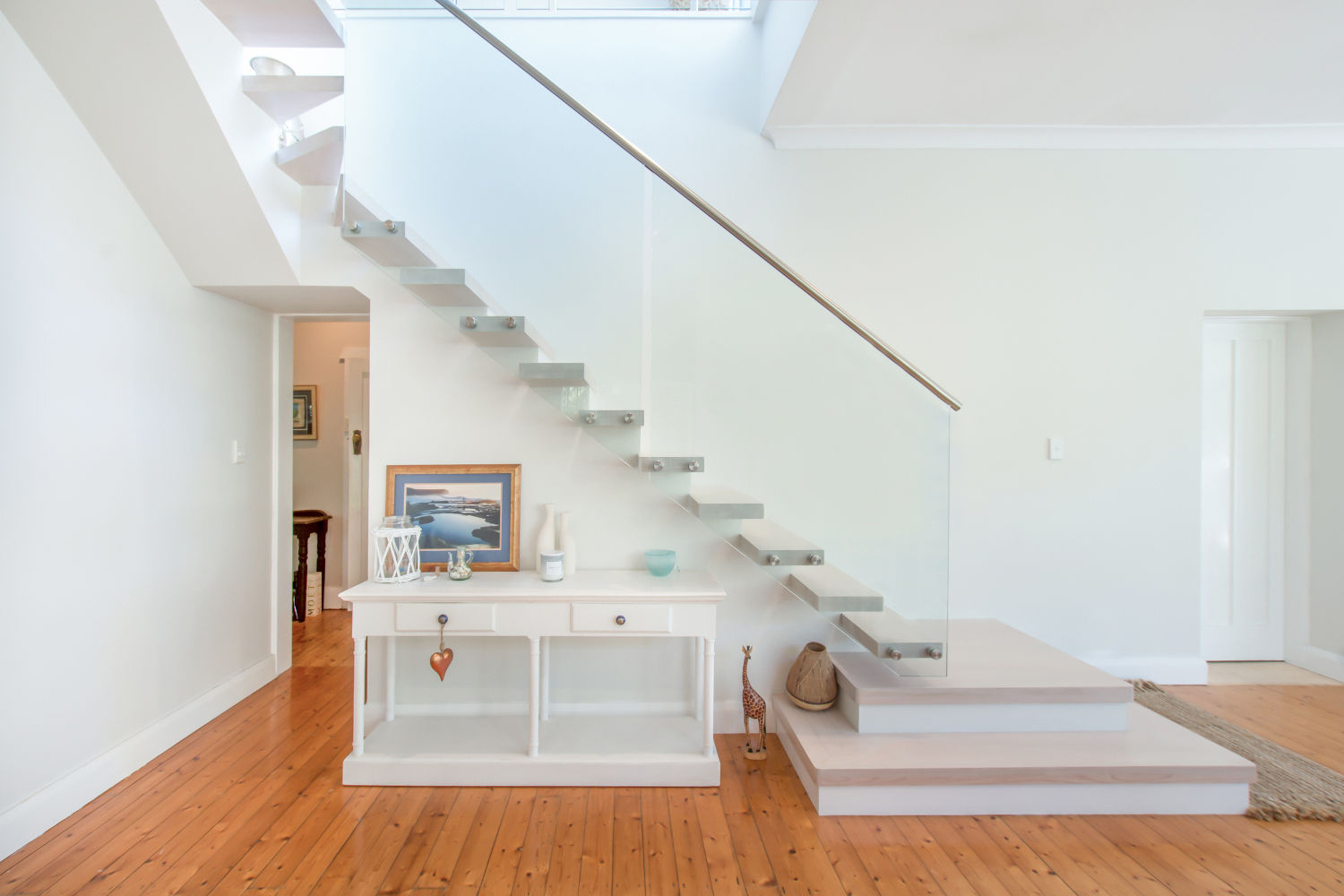
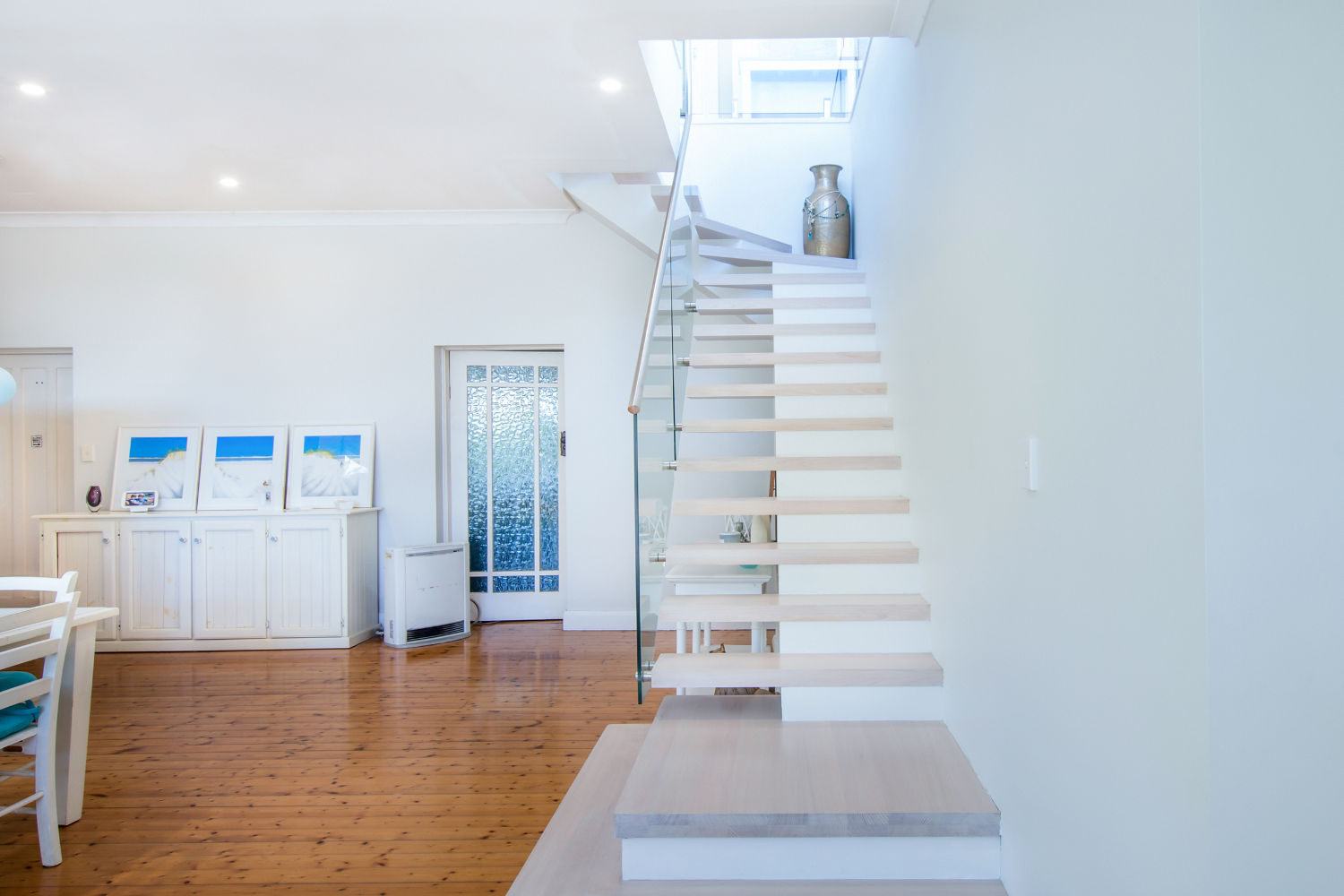
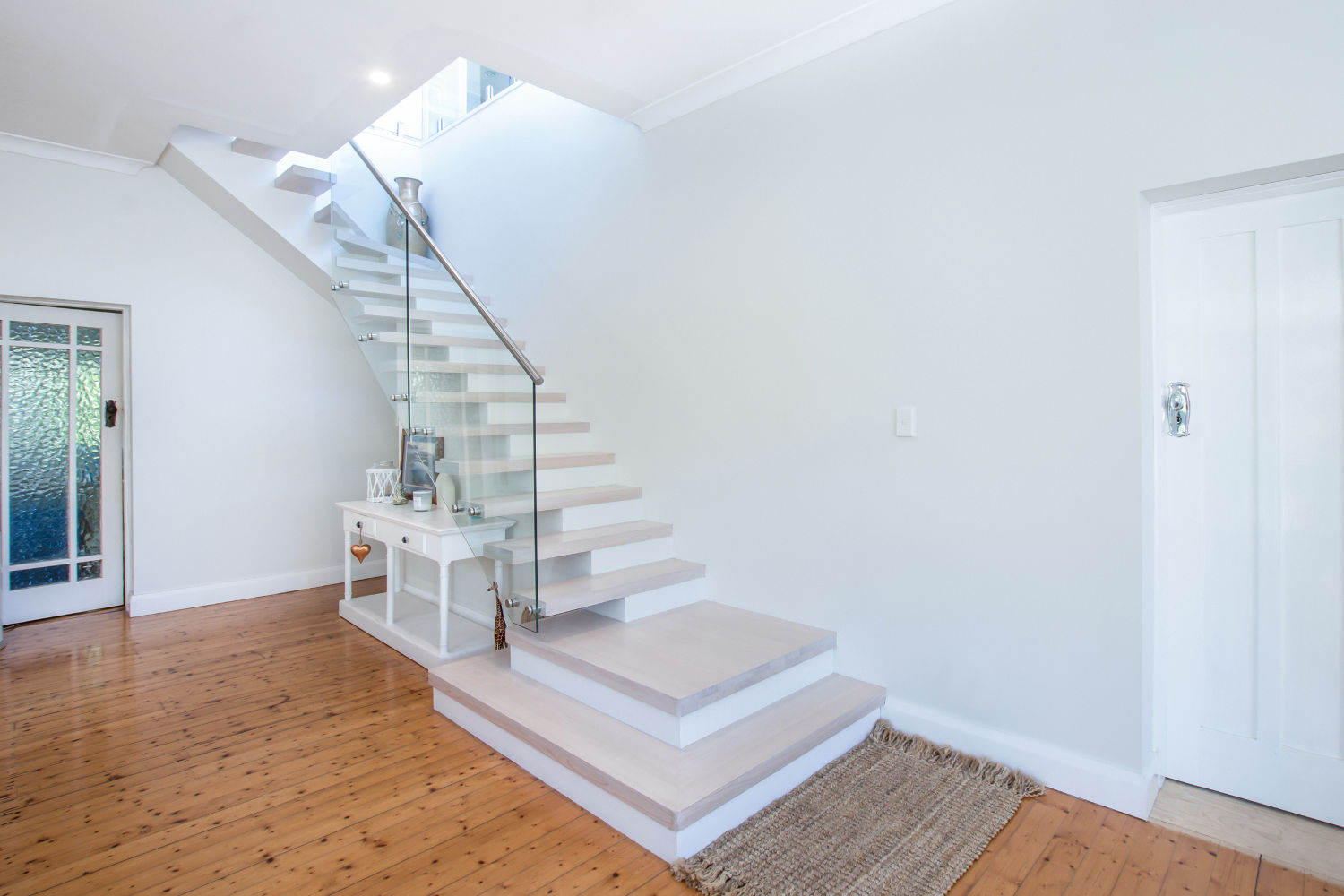
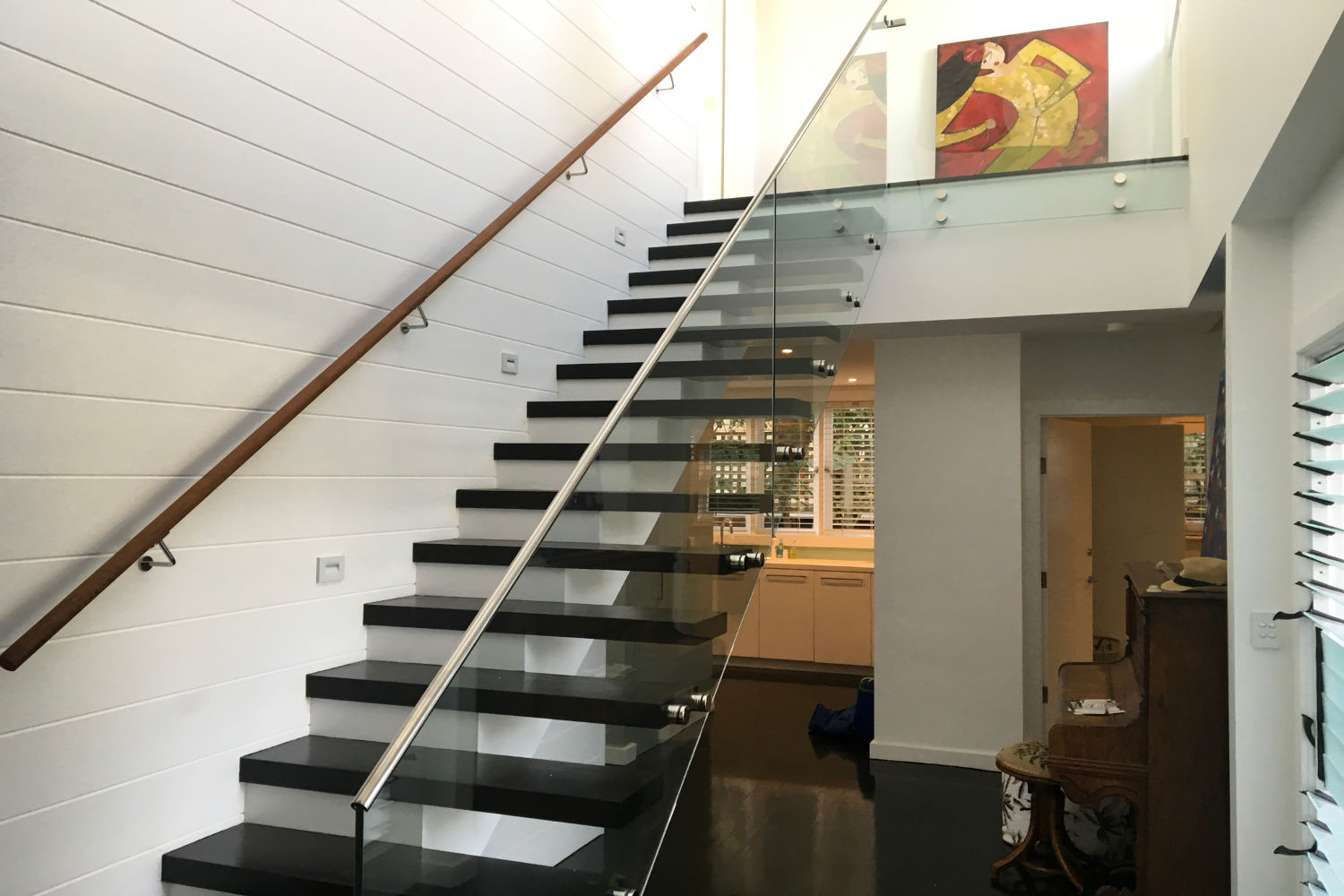
A cantilevered staircase, more commonly called floating staircase, is one where each individual step is anchored at one end only. One end is fixed securely into a load-bearing wall. The other end floats entirely free, with nothing beneath it.
The result is a staircase with no visible means of support. No stringer running along the side. No base beneath the steps. Just a clean, seemingly gravity-defying run of treads suspended in open space.
The magic is in what you can’t see. Concealed within the wall is a structural steel framework, engineered to carry the full load of the staircase through each individual tread. The engineering is rigorous. The effect is effortless.
|
|
|
|
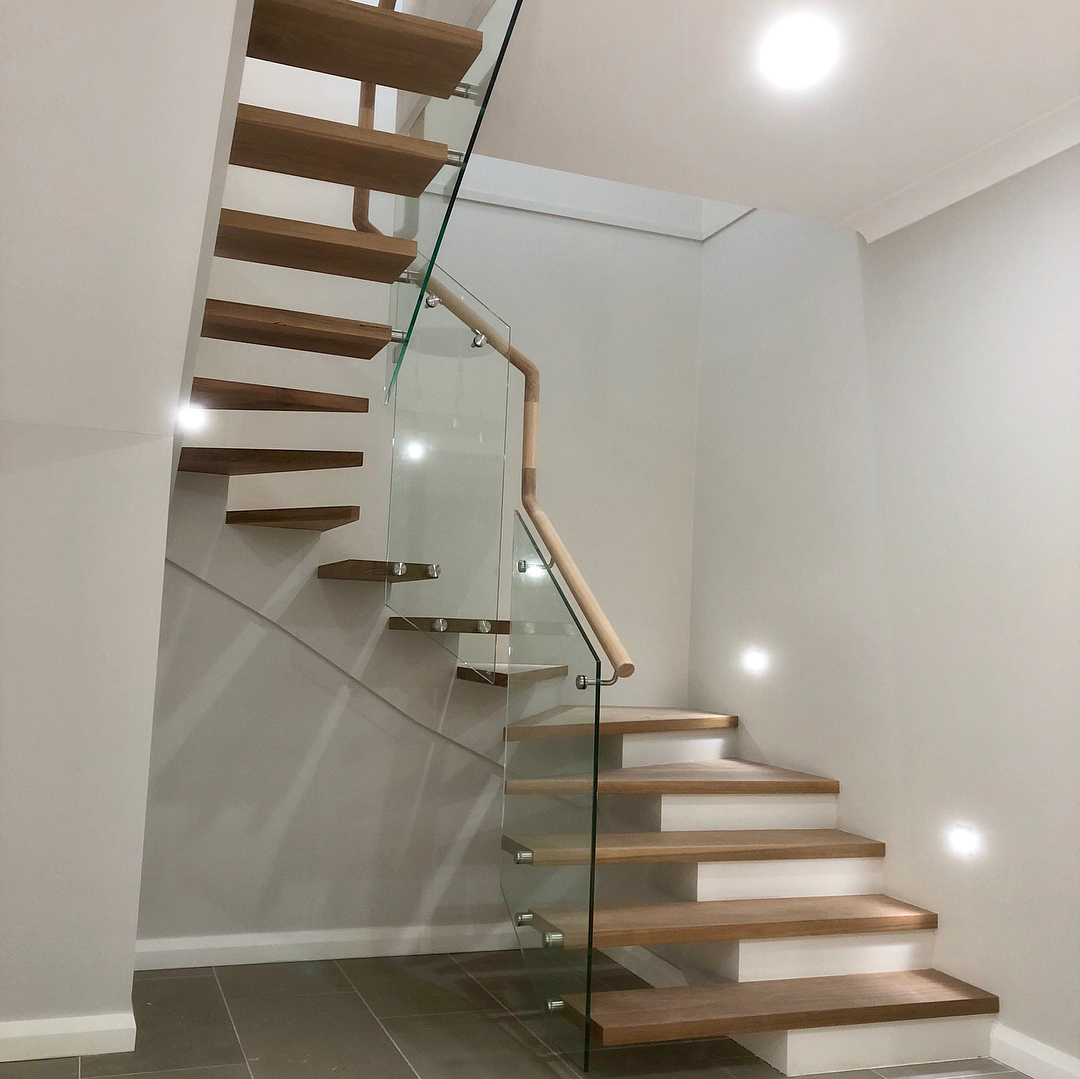
The look: sculptural, minimal, unmistakably modern.
Each tread appears to hover in mid-air. Light passes freely beneath the steps and through the staircase, making a space feel larger, airier and more considered.
The Floating Staircase
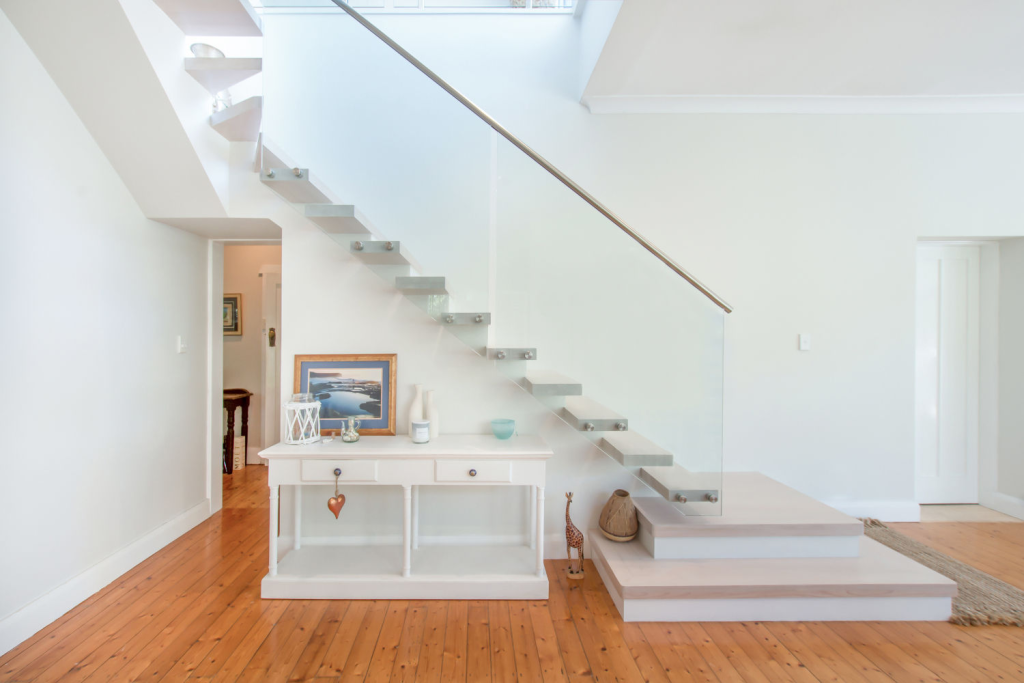
If closed riser stairs are the classic — the archetype, the timeless standard — then cantilevered stairs are the counterpoint. Bold where the other is settled. Open where the other is enclosed. A statement where the other is a story. Paired with frameless glass balustrades or slender metal railings, a floating staircase becomes something closer to sculpture than structure.
The aesthetic is unmistakably contemporary. Clean lines, negative space, premium materials. Timber treads in rich natural grain. Or concrete. Or stone. The floating form works beautifully with all of them, because the design draws attention to each individual tread as an object in its own right.
These are stairs that say something about the space they’re in and the people who chose them.
Built for spaces that mean business.
Cantilever architecture has its roots in some of the most celebrated buildings of the 20th century. Frank Lloyd Wright’s Fallingwater, perhaps the most famous house ever built, made the cantilever its defining idea, with floors and terraces projecting boldly into open air. The floating staircase carries that same philosophy into the vertical: structure that appears to defy gravity, because the engineering is hidden and the confidence is total.
That same thinking has shaped the world’s most considered commercial spaces. A floating staircase in a hotel lobby signals that this is a place where details matter. In a restaurant or bar, it creates a focal point and an arrival moment. In a boutique, showroom or office, it tells visitors immediately that they’re somewhere considered and deliberate. The staircase isn’t incidental to the experience. It is the experience.
For residential builds, the philosophy translates just as naturally. The cantilevered stair suits any home where modern architecture is the brief. Open plan living, double-height voids, generous natural light. A floating staircase belongs in all of them. It preserves sightlines, amplifies space, and gives the home an architectural centrepiece that no amount of furnishing can replicate.
Other Types of Floating Stairs
The classic cantilevered stair is the purest expression of the floating staircase idea, but it isn’t the only way to achieve that open, contemporary look. These two styles share the same design spirit while taking a different structural approach. Each has its own character and finds its home in a different kind of space.
Where a fully cantilevered stair anchors each tread at one end only, a semi-cantilevered stair provides support at both ends, typically through a combination of a wall fixing on one side and a stringer or support on the other. The floating visual effect is preserved, with open risers and a clean, airy feel, but the dual fixing point makes for a more straightforward structural solution in homes where a full cantilever isn’t practical.
Semi-cantilevered stairs are a popular choice in renovations and period homes being brought into a more contemporary style, where the existing structure may not include a reinforced load-bearing wall suited to a full cantilever. They work equally well in new builds where the design brief calls for a modern, light-filled staircase without the full engineering commitment of a true cantilevered design. You’ll find them in coastal homes, architect-designed renovations and contemporary family homes where the priority is visual openness without sacrificing structural simplicity.
A mono stringer staircase runs a single central spine, usually a steel beam, up the middle of the flight, with treads projecting outward from both sides. For this reason, this style is also given the name ‘central stringer stairs’. Unlike a cantilevered stair where the support is hidden entirely within the wall, the mono stringer makes its structure visible, with the spine itself becoming part of the design statement. The treads appear to float off the central beam, and with open risers on both sides, light moves freely through the staircase from every angle.
The mono stringer suits spaces where the staircase sits away from the wall entirely, anchored at the floor and ceiling rather than fixed into a side wall. This makes it a natural choice for large open plan homes, warehouse conversions and commercial interiors where the staircase occupies a central position in the room rather than running along its edge. It is also a popular option in modern apartment builds and boutique commercial spaces, where the stringer itself, finished in powder-coated steel or exposed metal, becomes a deliberate design feature rather than something to be concealed.
Popular amongst who?
Architects and interior designers working on high-specification residential and commercial projects. Developers building premium apartments or boutique mixed-use spaces. Homeowners who have invested in a considered, contemporary home and want every element to match that intention. Hospitality and retail operators who understand that how a space feels is as important as what it sells.
You’ll find floating stairs in architectural homes across Sydney’s northern beaches and eastern suburbs, in new commercial builds along the Central Coast, and in hospitality and retail spaces throughout NSW where the design brief starts with the word exceptional.
See our floating staircase work for yourself.
Words and descriptions only take you so far with a staircase like this. Browse our gallery of cantilevered stair projects and see what a floating staircase could do for your space.
Projects
Gallery

Why Allwood Stairs?
We’ve been building staircases since 1996. In that time we’ve completed more than 25,000 installations for over 6,500 customers across Sydney, the Central Coast and Newcastle. That’s not a number we take lightly. It’s a track record built one staircase at a time, on every kind of project from high-specification new builds to considered heritage renovations.
Every staircase we make is custom-built to order. Nothing leaves our workshop off the shelf. We measure, design, quote, manufacture and install, managing the full process from first conversation to final fit-out. For builders and architects, that means one accountable partner and no gaps in the chain. For homeowners, it means a staircase made precisely for your space, your home, and your brief.
Our purpose-built workshop runs CNC manufacturing capability, which means tight tolerances, consistent quality, and a clean finish on every job regardless of scale. Premium craftsmanship isn’t a promise we make lightly. It’s built into how we work.
Whether you’re a premium residential builder coordinating a high-end new build, an architect or designer specifying a custom timber staircase, or a homeowner who simply wants it done properly, you’ll find the same standard of care and the same attention to detail at every stage of the process.
28 years. 25,000 staircases. Built to last.
Let’s build yours.
Allwood Stairs designs and builds floating stairs across Sydney, the Central Coast and Newcastle. Our team can take care of the full installation, or provide kit stairs for the qualified carpenter on your project.
Get in touch for an obligation-free quote.
More of a traditionalist?
Not every space calls for a floating staircase, and that’s perfectly fine. If your home or project leans toward warmth, heritage, or classic timber craftsmanship, take a look at our closed riser stairs. Or if you’d like something in between—airier than closed riser, more familiar than cantilevered—our open riser stairs might be exactly what you’re after. Different approaches, same standard of craft.